

People buy vehicles to get somewhere. They can also buy them to express who they are—or who they hope to become.
That is the tension at the heart of automotive marketing. Everyday usefulness helps justify the purchase; lifestyle imagery, design and badge value can make it desirable. The vehicle performs a practical job while carrying a personal meaning.
India’s first National Household Travel Survey offers a substantial view of the practical side. Conducted by the National Statistics Office between July 2025 and June 2026, and released on 5 October 2026, it covered 4,92,023 households and more than 20 lakh people. It describes how people travel—not which vehicles they aspire to own or the status they attach to them.
The findings do not diminish aspiration. They raise a more interesting question: How closely does the life in the ad connect with the life of the buyer?
1. Ordinary journeys, extraordinary meaning
Among workers reporting the relevant within-day workplace travel, 42.6% use a two-wheeler as their primary mode. The urban share is 52.3%, compared with 37.1% in rural areas. Cars account for 3% nationally. These are commuting-mode shares, not vehicle-ownership figures.
Primary workplace travel mode | All India | Urban | Rural |
Two-wheeler | 42.6% | 52.3% | 37.1% |
Walking | 28.3% | 13.5% | 36.6% |
Bicycle | 10.7% | 5.8% | 13.4% |
Car | 3.0% | 5.7% | 1.5% |
Shares refer to commuting workers covered by the relevant survey measure, not the entire population.
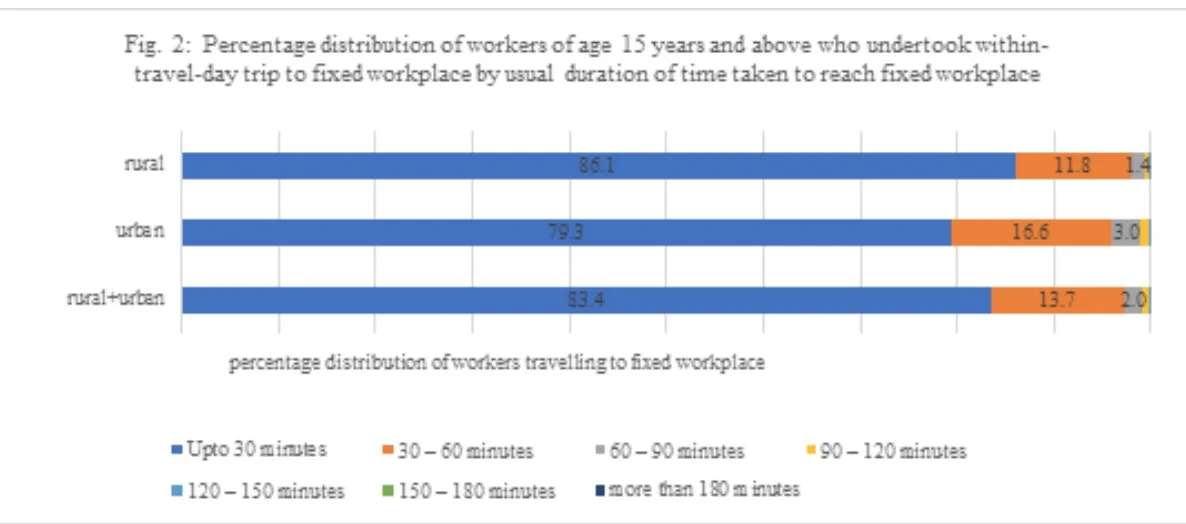
The survey also finds that 83.4% of fixed-workplace commuters reach work within 30 minutes. Average travel time is 25 minutes—27 minutes in urban areas and 23 minutes in rural areas. Duration alone does not establish distance or journey difficulty, but it places the everyday commute firmly in focus. I realised that cities like Mumbai, Bengaluru, Delhi thankfully do not typify the travel grind for all Indians!
Everyday use, however, does not imply a purely functional purchase. A motorcycle used for commuting can represent achievement. A scooter bought for household use can express independence or taste. These are possible meanings to investigate, not motivations measured by NHTS.
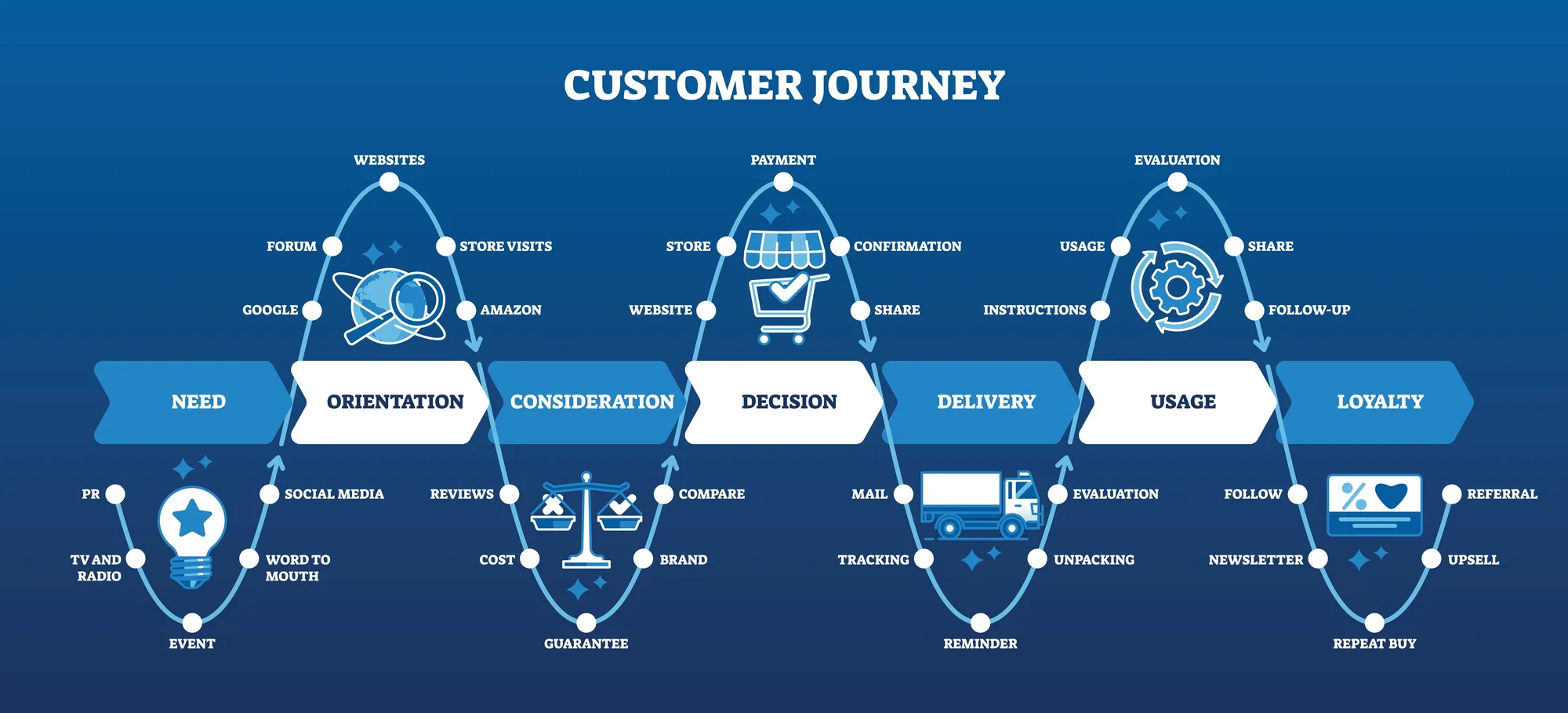
Hansa Cequity’s Automotive Customer Lifecycle playbook brings a complementary lens through its focus on “Mapping the Emotional Buying Journey.” One perspective examines how people move; the other directs attention to how they experience the purchase.
The distinction is revealing. A new motorcycle may make much the same journey as the one it replaces yet feel like significant personal progress.
The marketing question: Can a brand make ordinary life feel like an upgrade without pretending it is an endless adventure?
2. Aspiration also means belonging
The overnight-travel findings challenge the familiar image of travel as escape.
Socialising, communication and religious activities account for 70.2% of overnight household trips. Culture, leisure, sports and tourism account for 7.4%. The social and religious share is similarly high in rural and urban India: 69.7% and 70.9%, respectively.
These broad categories do not separately quantify weddings, family visits or particular religious occasions. Nevertheless, the contrast suggests that connection deserves as much attention as recreation.
Automotive lifestyle advertising often celebrates individual freedom: the driver, the open road, the possibility of leaving everything behind. The survey invites another emotional territory—the significance of reaching people who matter. Badge value need not disappear from this story. A vehicle can be a means of travelling and a visible expression of achievement when arriving. Pride and belonging can sit alongside freedom.
There is a commercial boundary, however. Buses account for 55.8% of overnight household trips and inter-city railways for 17.7%, together representing 73.5%. Cars account for 15.1%. An emotionally important journey is not automatically a private-vehicle opportunity.
For car brands, the challenge is therefore not simply to romanticise the trip. It is to connect the desire for ownership with a meaningful improvement over an established travel arrangement.
The marketing question: Could automotive advertising celebrate connection as powerfully as it celebrates escape?
3. The badge is not a ladder
The urban–rural contrast is especially relevant to two-wheeler brands.
In urban areas, more than half of the relevant commuting workers use two-wheelers. In rural areas, two-wheelers and walking have almost equal shares—37.1% and 36.6%. Bicycles account for another 13.4% of rural commuting modes.
It is tempting to read these figures as a progression: walking to bicycle, bicycle to motorcycle, motorcycle to car.
The survey cannot establish that progression. It shows current behaviour, not intended upgrades. Lower use does not, by itself, prove unmet demand.
Nor must aspiration follow a single hierarchy. A buyer might want a more distinctive motorcycle rather than a car. Another might seek a scooter that makes personal mobility easier. Someone else might value a car for family journeys while continuing to commute by two-wheeler.
These are hypotheses, not survey findings. But they expose the limits of treating every customer as someone waiting to climb the same mobility ladder.
For two-wheeler brands, this creates an interesting distinction between functional and symbolic upgrades. A replacement might offer better everyday usability, a more desirable identity—or both. The existing vehicle may already do the job; the new brand still needs to make the change meaningful.
The marketing question: Is the buyer seeking a better journey, a different identity—or a persuasive combination of the two?
4. Desire meets the ownership calculation
Average monthly expenditure on fixed-workplace commuting is ₹785 nationally, ₹1,044 in urban areas and ₹612 in rural areas. These figures span different travel modes. They are not full ownership costs, affordability thresholds or suitable direct comparisons with an EMI.
Their significance is contextual: a vehicle purchase sits alongside an existing way of travelling and spending.
This is where aspiration meets justification. The buyer may desire the badge and lifestyle promise while asking practical questions about financing, running costs and maintenance. The emotional and financial conversations can be different parts of the same decision.
Usefulness also extends beyond commuting. Among people reporting relevant non-work, non-education within-day travel, 54.1% reported travel for unpaid domestic services for household members; the urban figure was 60.1%. These are person-based purpose measures, not shares of all trips.
A vehicle may therefore be evaluated against several household responsibilities. Its appeal can be emotional while its justification is rooted in daily life.
Hansa Cequity describes its automotive lifecycle playbook (link below) around emotion, speed and trust; it connects the emotional buying journey with test-drive conversion and the ICE-to-EV transition. Read alongside the survey, this suggests a useful distinction: advertising makes ownership desirable; the buying experience must make it believable.
The badge may answer, “What does this vehicle say about me?” The test ride, financing conversation and ownership explanation must answer, “Does it fit my life?” For an electric two-wheeler, that fit also raises questions about actual usage and charging access.
The marketing question: Does the aspiration created by the brand survive the experience of buying and owning it?
The survey reveals the routines into which vehicles must fit. The emotional-buying-journey lens adds a complementary question: what might ownership mean to the person making the purchase? Neither perspective is sufficient alone.
For automotive marketers, the interesting territory lies between them: the two-wheeler that makes an ordinary commute feel like progress; the car that combines household usefulness with a sense of achievement or an extension of one's personality. These are possibilities to understand, not motivations the survey has proved.
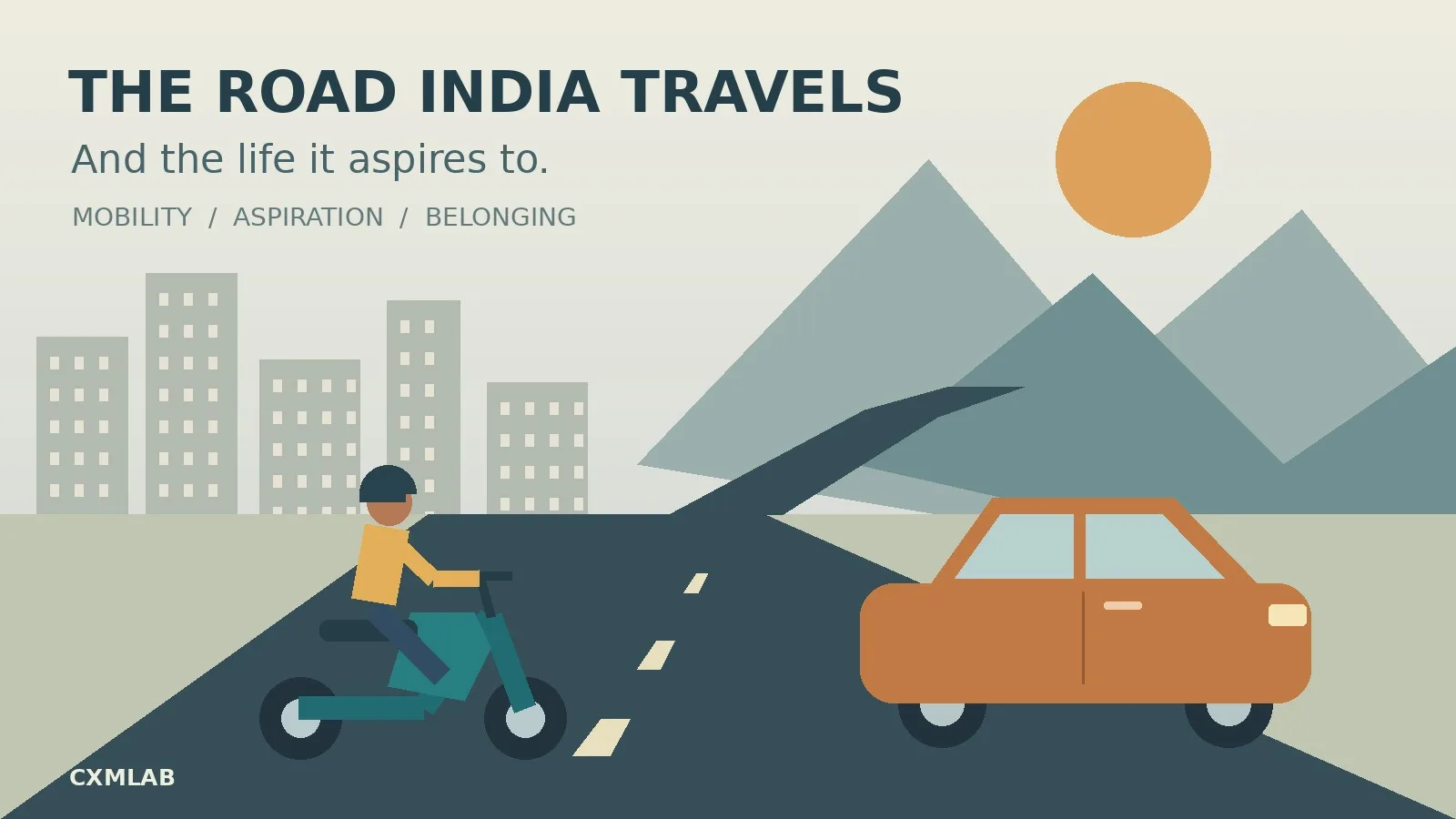
The mountain road still belongs in the TVC.
But the brand becomes more compelling when the imagined life and the lived life can recognise each other.
Resources -
Hansa Cequity Automotive customer lifecycle playbook - https://hansacequity.com/the-automotive-customer-lifecycle-by-hansa-cequity-playbook/
National Household travel survey July 25 – June 26 -https://static.pib.gov.in/WriteReadData/specificdocs/documents/2026/oct/doc_10098_20261005_16310501.pdf