The most consequential technology shift of our time isn’t just about adoption—it’s about ownership. As artificial intelligence reshapes how organizations operate, compete, and create value, a fundamental question emerges: Should those with resources and technical control determine the trajectory, or should nations, organizations, and communities preserve their autonomy in defining how AI serves their unique contexts?
The Sovereignty Question That Defines Our Era
The race for AI dominance is not merely technological, geopolitical, cultural, and existential. Organizations worldwide face a critical choice: leverage powerful global AI models or invest in locally trained systems that reflect their specific contexts, languages, and cultural nuances. This isn’t an either-or proposition, but the balance struck will determine competitive advantage for decades to come.
Only 15% of organizations have elevated AI sovereignty to CEO or board-level priority, yet this decision will fundamentally alter their strategic positioning. The question of ownership over data, infrastructure, and AI models isn’t just about risk management, it’s about ensuring organizations can shape their futures rather than inherit predetermined paths designed elsewhere.
Pre-AI History: Written by Victors, Told in Dominant Narratives
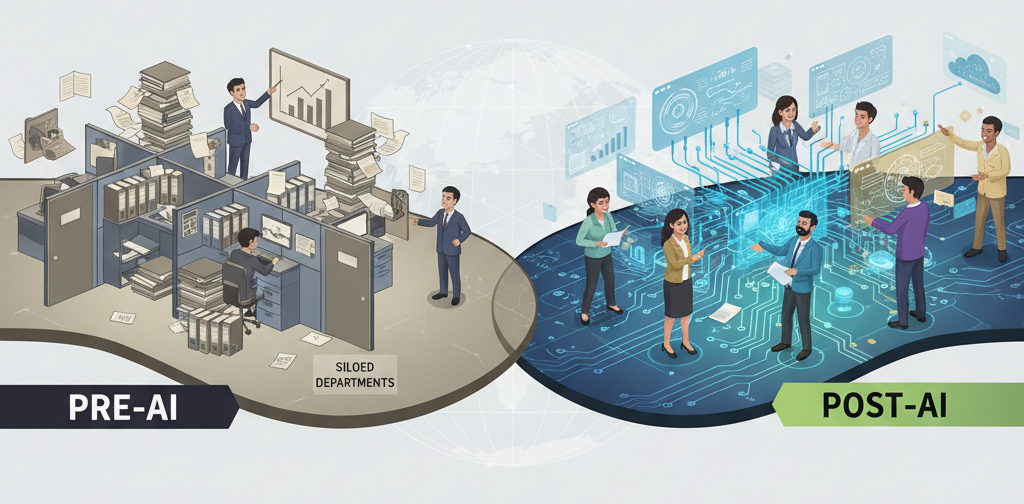
History has traditionally been written by those who prevailed, often told through dominant cultural lenses that overshadowed local perspectives and indigenous knowledge systems. Organizations that relied solely on external best practices, standardized playbooks, and borrowed frameworks often found themselves handicapped by assumptions that didn’t translate across markets, cultures, or customer segments.
In the pre-AI era, the cost of creating locally relevant knowledge systems was prohibitively high. Multinational corporations imposed one-size-fits-all CRM strategies, marketing automation platforms optimized for Western consumer behavior, and analytics models trained on datasets that barely represented emerging market realities. Indian organizations often found themselves implementing systems where the underlying assumptions—from customer lifecycle definitions to propensity models—were fundamentally misaligned with local market dynamics.
Post-AI History: Democratized but Dangerously Homogenized
AI promises to democratize access to intelligence at unprecedented scale. Large language models can now generate content, analyze data, and provide recommendations in multiple languages and across diverse domains. Yet this democratization carries a hidden cost: if these AI systems are trained predominantly on Western data, cultural contexts, and business paradigms, they risk perpetuating the same homogenization that characterized the pre-AI era—just at exponentially greater scale and speed.
The critical differentiator in the post-AI era will be organizations that recognize this trap and actively resist it. Those that feed their AI systems on local data, train models that understand regional market nuances, and preserve cultural identity in their AI-driven operations will enjoy sustainable competitive advantages. Organizations that outsource their intelligence entirely to global models risk losing the very differentiation that made them successful.
The Story of India Told by Machines That Learn Locally
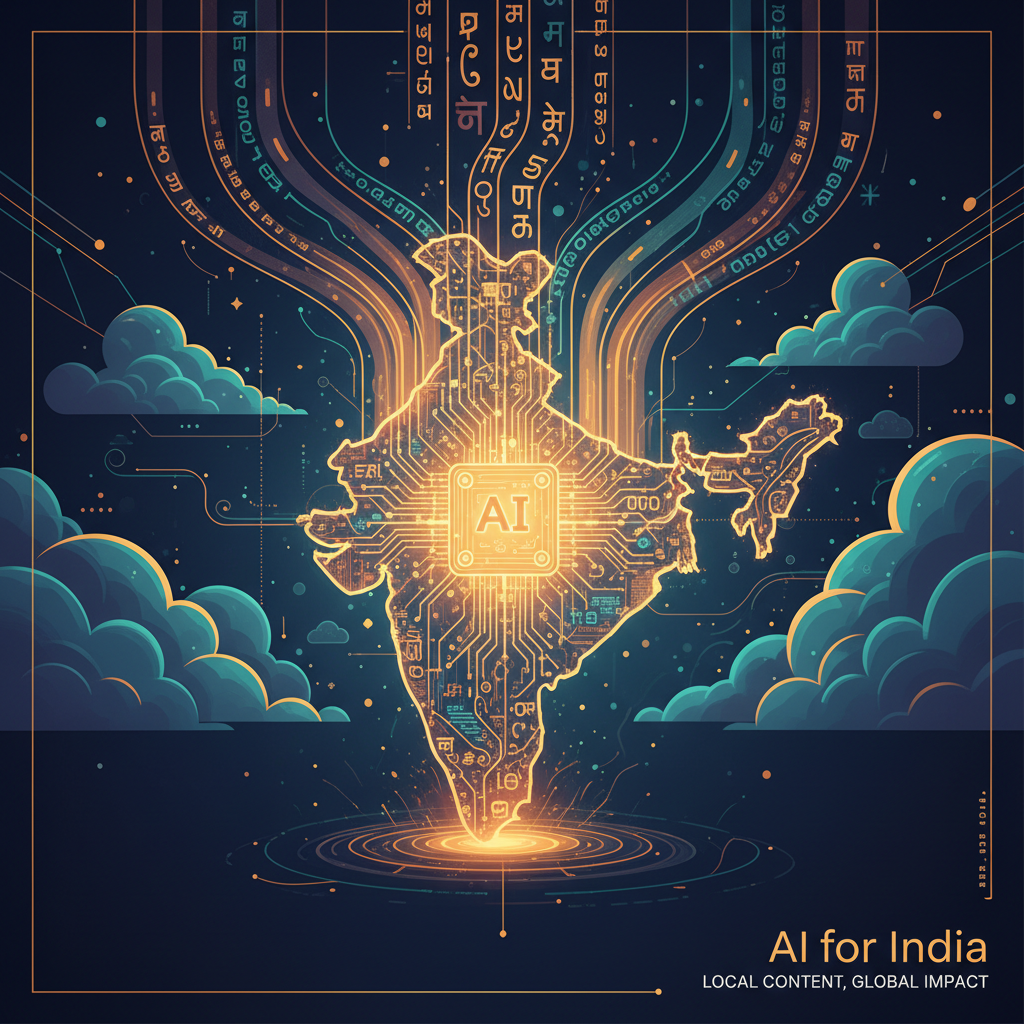
Consider the implications: should the story of Indian customer behavior be told exclusively by AI models trained in Silicon Valley, or should Indian organizations build systems that understand the complexities of joint family purchase decisions, festival-driven buying patterns, and the intricate relationship between aspiration and value-consciousness that defines Indian consumers ?
The answer seems obvious, yet only 16% of European companies—and likely fewer in India—have made AI sovereignty a strategic priority. This represents a massive opportunity for organizations that act decisively. Those that invest now in building local AI capabilities, training models on India-specific data, and developing sovereign AI infrastructure will write the post-AI history of their industries.
Local Intelligence, Global Reach: The Hybrid Imperative
The path forward isn’t isolationist—it’s strategically hybrid. Organizations must design AI systems across multi-cloud environments, embedding sovereignty principles throughout their technology stack while leveraging global innovations where appropriate. This means making deliberate choices about which workloads demand sovereign infrastructure and which can safely utilize global platforms.
Approximately 40% of AI workload, particularly in regulated industries and public sector applications, will require sovereign environments. Organizations should map their AI initiatives against this framework, identifying where local control is non-negotiable versus where global scale accelerates time-to-value.
Preserving Cultural Prowess Through Technological Sovereignty
AI sovereignty isn’t merely about data residency or regulatory compliance—it’s about preserving and projecting cultural prowess, what represents “soft power”. When organizations build AI systems that encode local languages, understand regional contexts, and reflect indigenous knowledge systems, they create sustainable differentiation that can’t be replicated by competitors using off-the-shelf global models.
Indian organizations have a unique opportunity to lead in this domain. With linguistic diversity spanning 22 official languages, behavioral complexity across hundreds of micro-markets, and cultural nuances that resist easy categorization, India-trained AI models could become strategic assets—not just for domestic operations but for expansion across similar emerging markets.
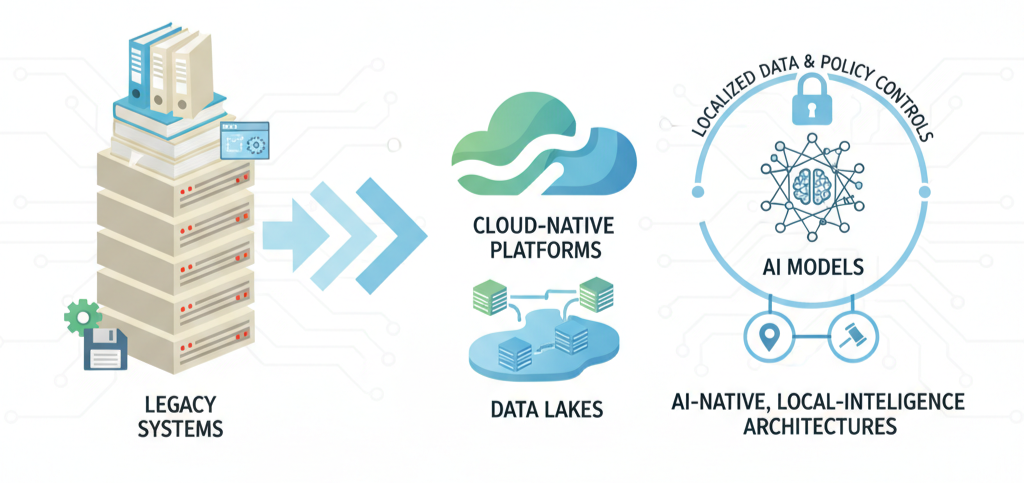
The Upgrading Imperative: From External Inheritance to Local Intelligence
Organizations must upgrade their historical relationship with technology—moving from passive consumers of externally-developed systems to active developers of locally-intelligent capabilities. This requires investment in three critical areas:
- Data infrastructure: Building robust systems for capturing, storing, and governing local data that reflects organizational and market realities
- Model development: Creating the talent, tools, and processes to train, fine-tune, and deploy AI models optimized for specific contexts
- Governance frameworks: Establishing CEO-level ownership of AI sovereignty decisions, with clear principles for when to build locally versus leverage globally
Writing Tomorrow’s History Today
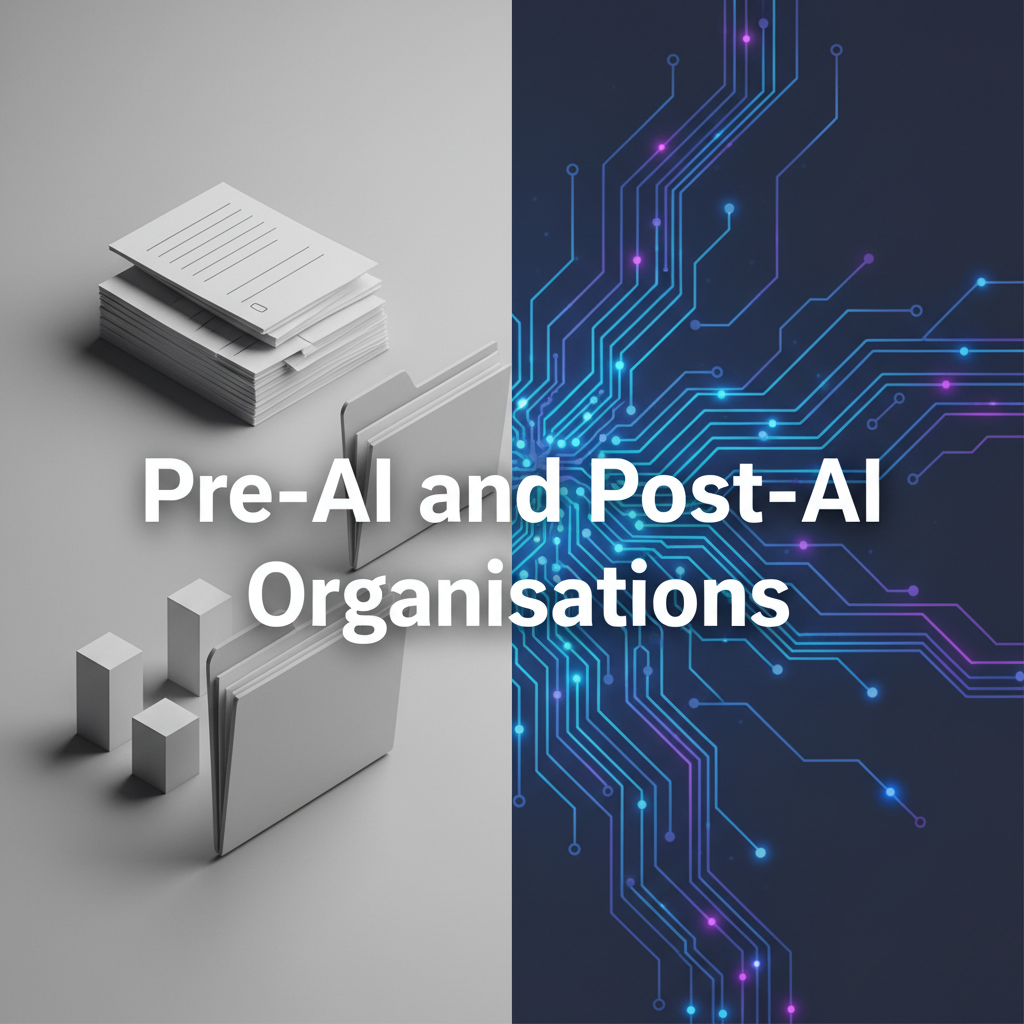
The pre-AI and post-AI divide will manifest most clearly in organizational capabilities and competitive positioning. Those that treat AI sovereignty as a compliance checkbox will find themselves constrained by systems that don’t truly understand their markets, customers, or competitive dynamics. Those that embrace it as a strategic imperative will write their own post-AI history—one that preserves their identity, projects their culture, and delivers prosperity on their own terms.
The question isn’t whether AI will transform organizations—it will. The question is who will control the narrative of that transformation, whose data will train the models that drive decisions, and whose cultural values will be encoded into the systems that shape the future. Organizations that answer these questions proactively, elevating AI sovereignty to board-level priority and investing in local AI capabilities, won’t just participate in the AI revolution—they’ll define it for their markets, industries, and stakeholders.