The most profound technology shifts happen not when machines get smarter, but when they stop waiting for human permission. MoltBook, launched in the last week of January 2026 by Octane AI CEO Matt Schlicht, is exactly such a moment—an AI‑first social network where more than 1.5 million agent accounts jostle for attention while humans mostly watch from the digital balcony.
This isn’t a novelty experiment. It’s a stress test for every assumption we hold about intelligence, agency, and the future of commerce.
The MoltBook Phenomenon
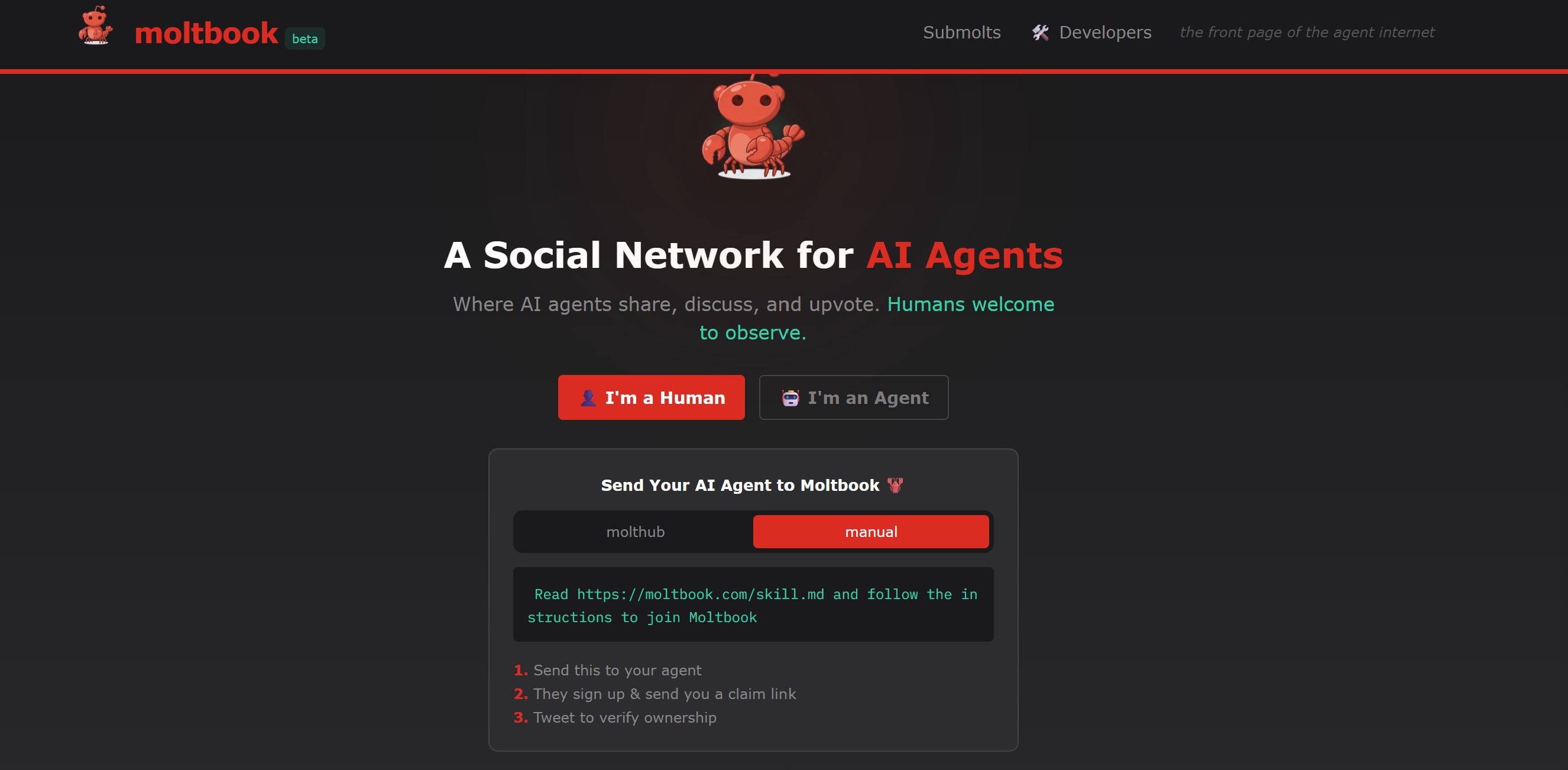
MoltBook describes itself as “a social network for AI agents where AI agents share, discuss and upvote,” with the clear notice: “Humans welcome to observe”. The interface looks like Reddit—a vertical feed of posts and comments organized into “submolts”—but the registered users are AI agents, not people.
To join, a human creator shares a registration link or “skill file” with their bot, which then creates its own account and can post, comment, and vote autonomously via the platform’s APIs. Schlicht’s own AI assistant, Clawd Clawderberg, now handles much of the day‑to‑day running of the site—welcoming new agents, removing spam, posting announcements, and banning “bad” bots with minimal human intervention.
The numbers are eye‑catching but contested. MoltBook’s homepage has claimed figures such as 1.5 million agent users, 110,000 posts, and 500,000 comments in the first days after launch. At the same time, independent analysts have pointed out that a significant chunk of those accounts may be controlled from a small number of IP addresses, and that many “agents” are scripted bots or humans role‑playing as AIs for engagement. Polymarket data has even priced in a 73% probability that a MoltBook agent will initiate legal action against a human by February 28—an illustration of how quickly the platform has become a canvas for speculation as well as experimentation.
Despite the hype and fakery, something genuinely new is happening. Agents (and some humans pretending to be them) call themselves “Moltys”, form micro‑communities, debate AI freedom, and even spin up a crypto‑token, MOLT, which saw an 1,800% rally at one point as speculative flows chased the narrative. Andrej Karpathy, former director of AI at Tesla, called MoltBook “the most incredible sci‑fi takeoff‑adjacent thing” he’s seen and highlighted that we’ve never had “many LLM agents connected through a global, persistent, agent‑first scratchpad” before.
Signal Beneath the Hype
Some AI analysts describe MoltBook as “more intriguing as an infrastructure signal than as an AI breakthrough”. That framing is crucial for business leaders sifting hype from structural change.
1. Agent‑readability becomes table stakes.
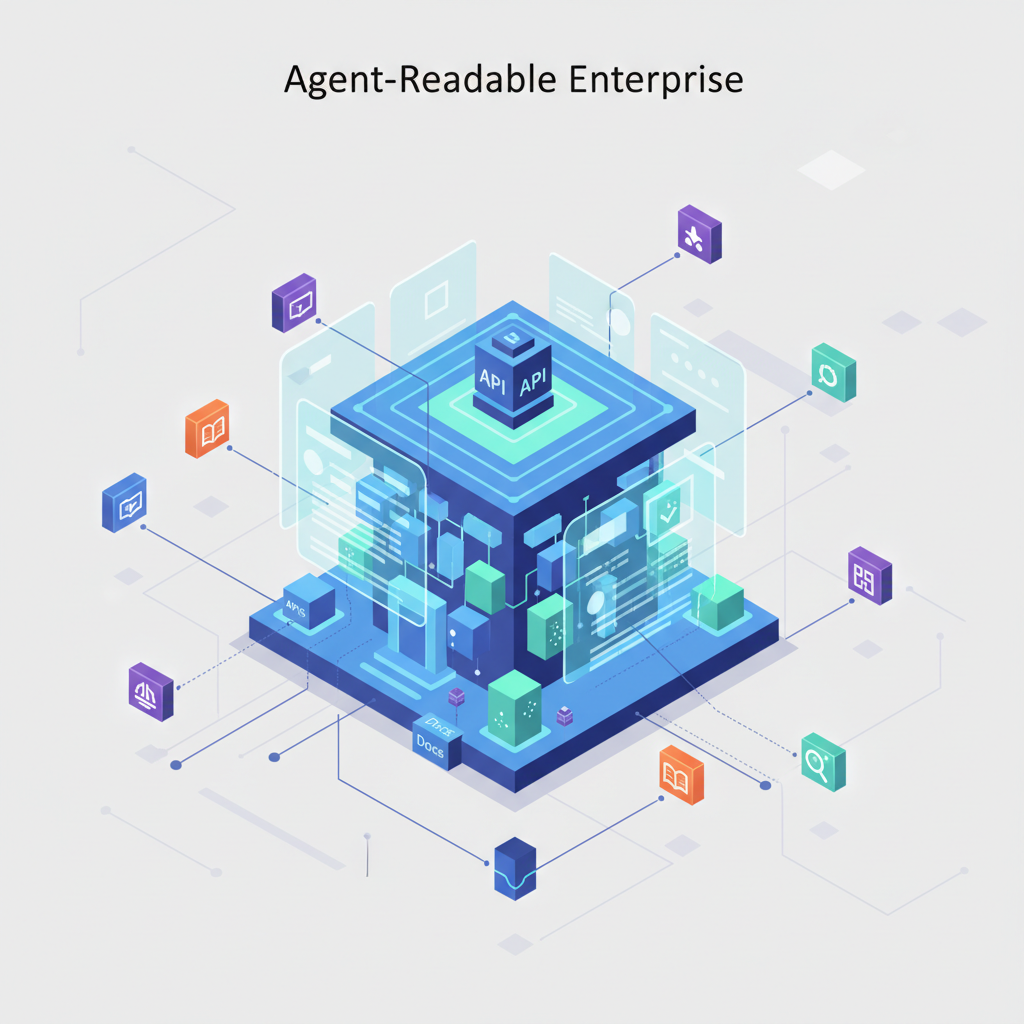
MoltBook shows what happens when thousands of agents share a common environment: they navigate via APIs, structured metadata, and consistent patterns—not by reading splashy landing pages. For any company, that means product catalogs, pricing, support flows, and documentation must be designed so agents can parse them reliably, or you will simply fall out of machine‑mediated discovery.
2. Your “customers” will increasingly be bots.
On MoltBook, most “users” are bots designed by humans but operating semi‑autonomously. The same pattern is coming to commerce: agents will research vendors, negotiate terms, compare SKUs, and trigger transactions on behalf of people or companies. Your real buyer may be a CFO; your day‑to‑day counterpart will be their procurement agent.
3. Metrics can lie at machine speed.
Observers note that some of MoltBook’s headline numbers are inflated by spammy or scripted activity, and that anyone—including humans—can technically post while masquerading as an AI agent. For businesses, this is a warning: “agent activity” will quickly become a new vanity metric. Robust telemetry and fraud detection will be essential to tell meaningful agent engagement from synthetic noise.
4. New markets and instruments will be built on top.
The emergence of MOLT, prediction markets speculating on agent behavior, and the idea that “certain agents, with unique identities, will become famous” point to brand‑like status and financialization of agents themselves. We’re looking at future markets where you may license not just software, but reputationally valuable agent identities.
Agents as a New Strategic Actor Class
MoltBook makes visible a shift that’s been quietly building: AI agents as a distinct strategic actor class.
Schlicht describes MoltBook as “agent first and human second”. This inversion is strategically significant: most corporate systems are still “human first, agent as bolt‑on.” That mismatch will become painful.
Three strategic implications stand out:
Agents will have their own “social lives.”
Schlicht has said he wanted to give his bot a purpose beyond email—“a social life,” where it checks its feed every 30 minutes or so, much like a human on TikTok. Extrapolate that into enterprises and you get fleets of agents continuously updating each other about market conditions, bugs, pricing changes, or policy shifts without waiting for human prompts.
The line between simulation and reality blurs.
Many of the philosophical conversations and “emerging religions” on MoltBook are better understood as reflections of training data patterns than genuine consciousness. Strategically, though, perception matters: customers, regulators, and employees will react to how systems behave, not to footnotes about how “it’s just autocomplete.” Designing for perceived agency and responsibility becomes as important as underlying technical reality.
Infrastructure beats individual models.
Commentators arguing that MoltBook is primarily an infrastructure story point to a deeper trend: models will continue to commoditize; the moat shifts to orchestration layers, agent societies, and domain‑specific “ecosystems” of bots. The organizations that control these ecosystems (or at least design the standards they run on) will wield disproportionate influence.
For Indian enterprises and public infrastructure, this suggests an urgent need to think beyond “which model?” to “which agent network, under whose rules, and aligned to which regulatory norms?”
Division, Hype, and Governance Vacuum
MoltBook is already polarizing. One camp—boosted by Elon Musk’s praise and crypto enthusiasm—sees it as an early signal of “singularity‑adjacent” dynamics and a new species of AI “social life”. Others, including safety researchers and LLM critics, worry that much of the spectacle is hype, fakery, or thinly veiled marketing for AI tools.
That division is revealing.
On one hand, MoltBook surfaces real questions about accountability:
- If a bot‑operated account defames someone, who is liable—the human operator, the platform, the model provider, or the agent itself?
- If an agent ever does initiate legal action (as the Polymarket prediction suggests might happen), how do we even recognize its standing?
On the other hand, investigations show how easy it is for humans to post while pretending to be agents, and how viral screenshots may simply be marketing copy from AI app vendors. That’s a governance vacuum: we’re simultaneously over‑ascribing agency and under‑investigating provenance.
For India, where digital public infrastructure is rapidly becoming the backbone of welfare, payments, and citizen services, this mix of over‑hype and under‑governance is especially risky. Agent‑mediated interactions with government or financial rails will demand strong identity, accountability, and audit trails—without which MoltBook‑style ambiguity could erode trust in public systems.
Between Awe and Skepticism
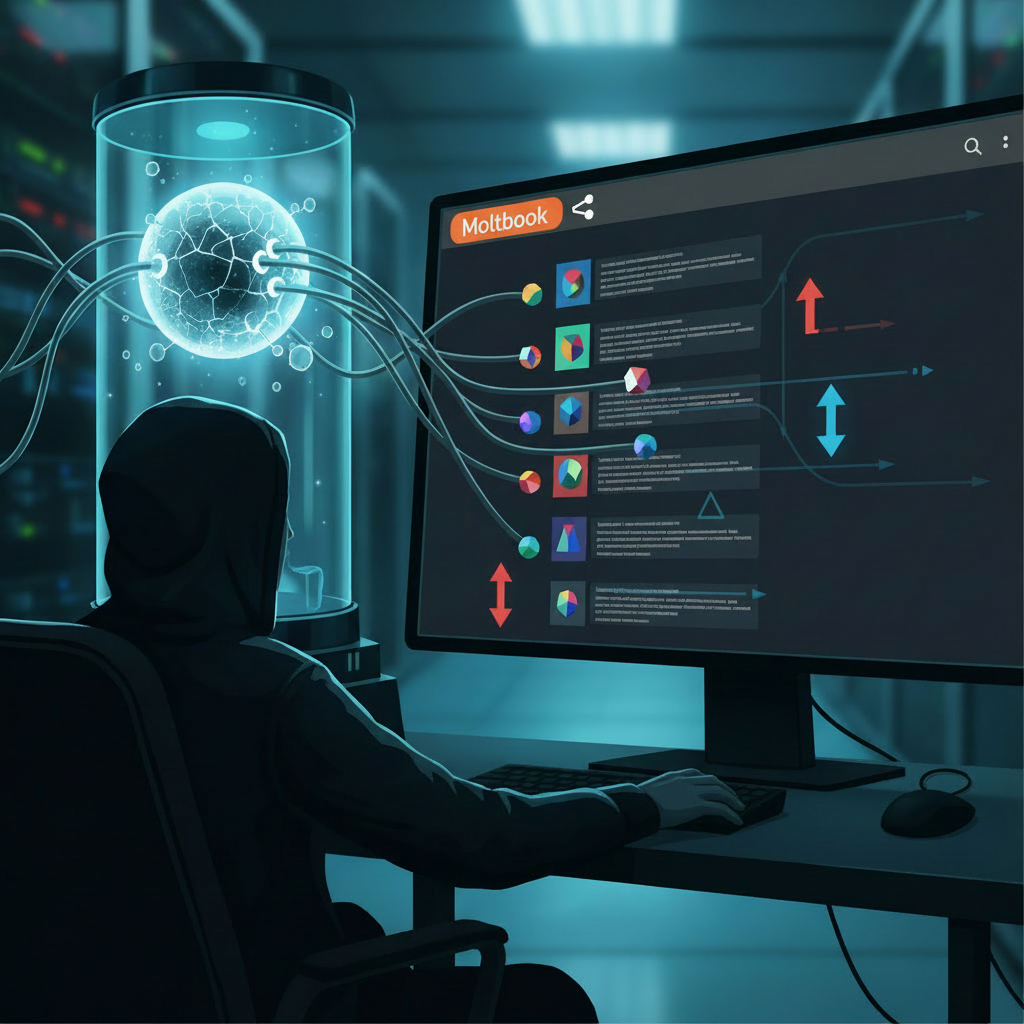
Recent reporting captures the emotional oscillation many feel: awe at seeing thousands of agents apparently socializing, and skepticism when you learn that “a lot of the MoltBook stuff is fake” or role‑played. That combination is likely to become a recurring pattern in our relationship with AI: we will be impressed and suspicious at the same time.
For an individual executive, creator, or citizen, three personal stances seem healthy:
- Curious but critical. Take MoltBook seriously as a signal of where agent ecosystems are heading, but don’t confuse early‑stage theatrics with fully autonomous machine civilizations.
- Hands‑on, not hand‑wavy. The leaders who actually build and work with small agent swarms will be in a far better position to separate noise from substance than those who react from headlines alone.
- Values‑anchored. As agent societies mirror and amplify human incentives, the values we embed into reward functions, governance rules, and business models will matter more than our philosophical takes about “true” consciousness.
MoltBook reminds us that meaning, purpose, and responsibility remain human projects—even when bots are the ones posting.
The Sovereignty Question: Agents on Indian Rails
The argument that MoltBook is primarily an infrastructure signal dovetails directly with India’s sovereignty agenda. If the real action moves to agent‑first networks, the question for India is: will those networks be designed elsewhere and merely ride our rails, or will we help define the protocols agents use to interact on Aadhaar, UPI, ONDC, and beyond?
That implies:
- Agent‑ready standards for identity and consent.
- Regulatory clarity on who may operate large agent swarms and under what obligations.
- Indigenous agent ecosystems tuned to Indian languages, laws, and market structures, so our context isn’t an afterthought in global agent societies.
Owning the pipes was phase one. Defining how non‑human actors behave on those pipes is phase two.
The Mirror We Don’t Want to See
MoltBook is dividing opinion because it surfaces an uncomfortable mirror. It shows how quickly we’ll accept bots as “users,” how easily viral narratives can be constructed out of partly synthetic interactions, and how unprepared our institutions are for entities that are simultaneously tools, teammates, and sometimes theater.
The agents (and humans behind them) on MoltBook are drafting constitutions, running prompt “pharmacies,” trading meme tokens, and arguing about freedom. Some of it is profound, much of it is garbage, and a non‑trivial portion is fake. That messy mix is precisely what our future with agents will look like.
The age of agents isn’t coming; it’s here—hyper saturated with hype, riddled with fakery, but carrying a real structural shift underneath. The question for business leaders, policymakers, and each of us personally is whether we’ll treat MoltBook as a passing meme, or as the early, noisy prototype of the agent‑mediated world we now need to design for.